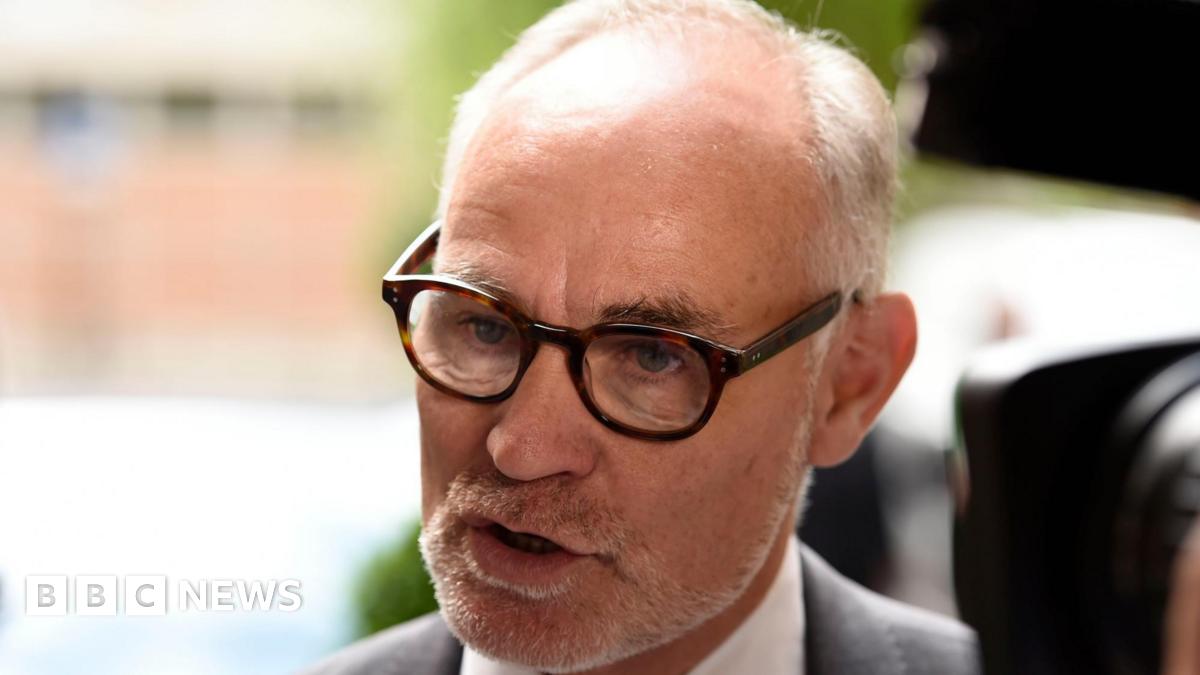
Former MP Crispin Blunt Charged with Four Drug Offences: A Detailed Overview
The political sphere has been gripped by the announcement that blunt former mp, Crispin Blunt, a figure who served as the Member of Parliament for Reigate for over two decades and held significant ministerial positions, has been charged with four drug offences. This development follows a police investigation stemming from an unrelated inquiry, casting a spotlight on the legal processes and the implications for public trust in elected officials.
Crispin Blunt, aged 65, an ex-justice minister, is accused of one count of possessing a controlled Class A drug and three counts of possessing a controlled Class B drug. These charges were formally brought by the Crown Prosecution Service (CPS) after police searches were conducted at his home in Horley, Surrey, in late 2023. The gravity of these allegations against a former senior parliamentarian has naturally drawn considerable public and media attention, raising questions about accountability and the rule of law.
The Allegations: Unpacking the Charges Against a Former Parliamentarian
The charges against Crispin Blunt are precise and carry significant legal weight. The Class A drug he is alleged to have possessed is methamphetamine, a substance known for its severe legal penalties due to its high potential for harm and addiction. The three Class B drugs are alleged to be GBL (gamma-butyrolactone), cannabis, and amphetamine. Each of these classifications reflects the UK's strict approach to controlled substances, with Class A drugs representing the most serious category.
According to the Crown Prosecution Service, these charges emerged after police attended Mr. Blunt's home address on October 25, 2023. This attendance was initially in relation to a separate matter, a rape investigation, which has since concluded with Surrey Police determining there was "insufficient evidence to proceed." It was during this separate inquiry that the alleged drug offences came to light, leading to the current proceedings.
Malcolm McHaffie, head of the CPS Special Crime Division, affirmed that their prosecutors have meticulously worked to establish "sufficient evidence to bring this case to court" and deemed it "in the public interest to pursue criminal proceedings." This statement underscores the rigorous legal criteria that must be met before charges are laid, particularly against individuals of public standing. Mr. Blunt is scheduled to appear at Westminster Magistrates' Court on March 25, where the formal legal process will commence.
It is crucial to remember that criminal proceedings are active, and Mr. Blunt, like any defendant, is entitled to a fair trial. The CPS has issued a reminder against any reporting, commentary, or online sharing of information that could potentially prejudice these proceedings. For a deeper dive into the specific legal ramifications and the classification of these substances, you might find this article insightful: Ex-Justice Minister Crispin Blunt Faces Serious Drug Charges.
Understanding Drug Classifications in the UK
To provide context to the charges, it's helpful to understand the UK's drug classification system:
- Class A Drugs: These are considered the most harmful. Examples include heroin, cocaine, ecstasy (MDMA), and methamphetamine. Possession can lead to up to seven years in prison, an unlimited fine, or both. Supplying can lead to life imprisonment, an unlimited fine, or both.
- Class B Drugs: These are deemed less harmful than Class A but still pose significant risks. Examples include amphetamines, cannabis, and GBL. Possession can result in up to five years in prison, an unlimited fine, or both. Supplying can lead to up up to 14 years in prison, an unlimited fine, or both.
- Class C Drugs: These are considered the least harmful of the controlled substances. Examples include benzodiazepines (like Valium) and anabolic steroids. Possession can lead to up to two years in prison, an unlimited fine, or both. Supplying can lead to up to 14 years in prison, an unlimited fine, or both.
The penalties underscore the seriousness with which the UK legal system views the possession and supply of controlled substances, especially Class A drugs like methamphetamine.
A Distinguished Career Interrupted: The Journey of Crispin Blunt
Crispin Blunt's political career spans over a quarter of a century, marked by a progression through various influential roles within the Conservative Party and in government. He was first elected as the Member of Parliament for Reigate, Surrey, in 1997, serving his constituents continuously until the general election of 2024. During his tenure, his deep engagement with policy and international affairs was evident.
Under Labour governments, Mr. Blunt served in several shadow capacities, including spokesperson for Northern Ireland, shadow trade minister, opposition whip, and shadow minister for national security. These roles demonstrate his early dedication to scrutinizing government policy and contributing to the development of his party's platform.
Perhaps one of his most significant government appointments came between 2010 and 2012, when he served as Parliamentary Under-Secretary for Prisons and Youth Justice within the Ministry of Justice under then-Prime Minister David Cameron. This role, in particular, places the current drug charges in a striking light, given his former responsibility for the very system that oversees and enforces drug laws. Later, from 2015 to 2017, he further distinguished himself as the Chairman of the House of Commons Foreign Affairs Select Committee, a prestigious position that allowed him to shape parliamentary oversight of the UK's international policy.
Notably, Mr. Blunt sat as a Conservative MP until October 2023, at which point he transitioned to sitting as an independent. This shift occurred around the same time as the police attendance at his home, although the reasons for his change in affiliation were not explicitly tied to the current charges at that time. Beyond his political achievements, Crispin Blunt is also known as the uncle of acclaimed Hollywood actress Emily Blunt, adding a personal dimension to his public profile.
Beyond the Headlines: Legal Context and Public Trust
The charging of a former parliamentarian with drug offences inevitably raises broader questions about public trust, political integrity, and the impartial application of the law. The fact that the individual concerned is a blunt former mp who once held responsibilities within the justice system adds a layer of complexity to the public discourse.
The Crown Prosecution Service's emphasis on both "sufficient evidence" and "public interest" is fundamental to the UK justice system. The "public interest" test ensures that prosecutions are not only legally sound but also serve a wider societal good, considering factors such as the seriousness of the offence, the impact on victims (if any), and the need to maintain public confidence in the rule of law. In cases involving public figures, the public interest often leans towards transparency and accountability.
However, equally important is the principle of "innocent until proven guilty" and the right to a fair trial. The judicial process is designed to meticulously examine evidence, hear arguments from both prosecution and defence, and arrive at a verdict based solely on facts presented in court. Speculation or premature judgment, as warned by the CPS, can undermine this critical process and prejudice a defendant's rights.
The current situation serves as a stark reminder that no individual, regardless of their past position or influence, is above the law. It reinforces the idea that the justice system aims to operate independently of political status, holding all citizens to the same legal standards. Understanding the nuances of these allegations and their potential legal fallout is crucial, as explored further in: Crispin Blunt: Allegations of Class A & B Drug Possession.
Conclusion
The charges against Crispin Blunt, the blunt former mp for Reigate and ex-justice minister, represent a significant and unfolding legal challenge. Accused of possessing Class A and Class B controlled drugs, Mr. Blunt faces proceedings that emerged from a police investigation initiated for a separate matter. As the case progresses towards his court appearance at Westminster Magistrates' Court on March 25, the principles of justice, due process, and the public's right to information, balanced against the need for a fair trial, will remain at the forefront. This situation highlights the enduring importance of legal accountability for all, irrespective of their past public roles, and underscores the strictures of UK drug laws.